
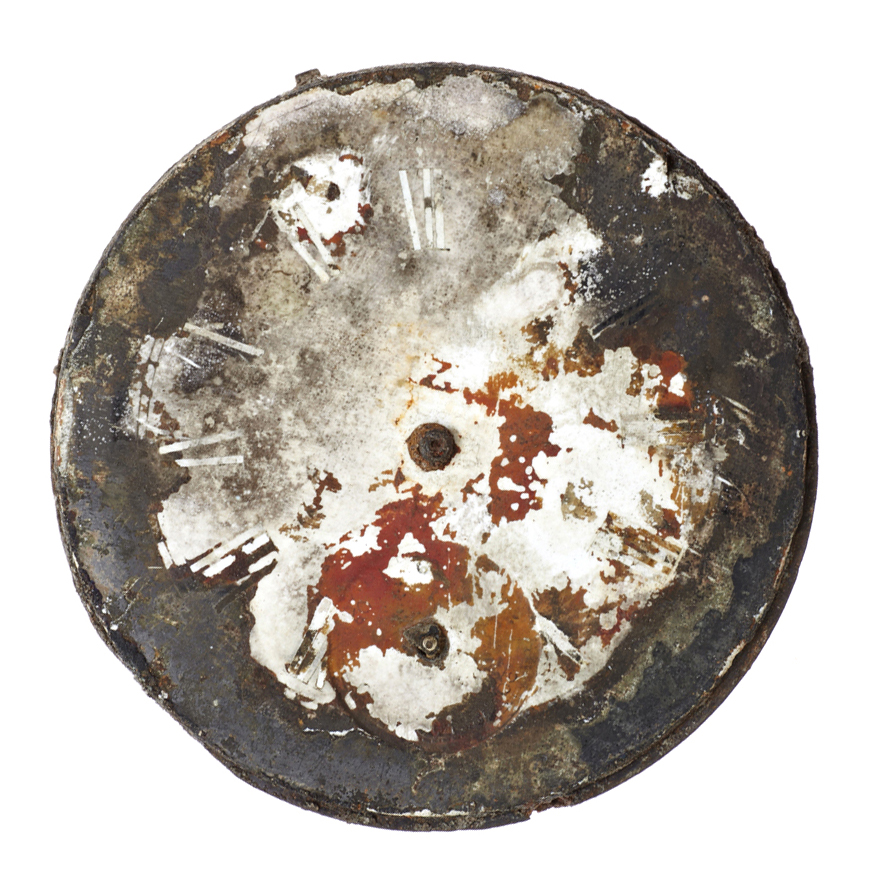
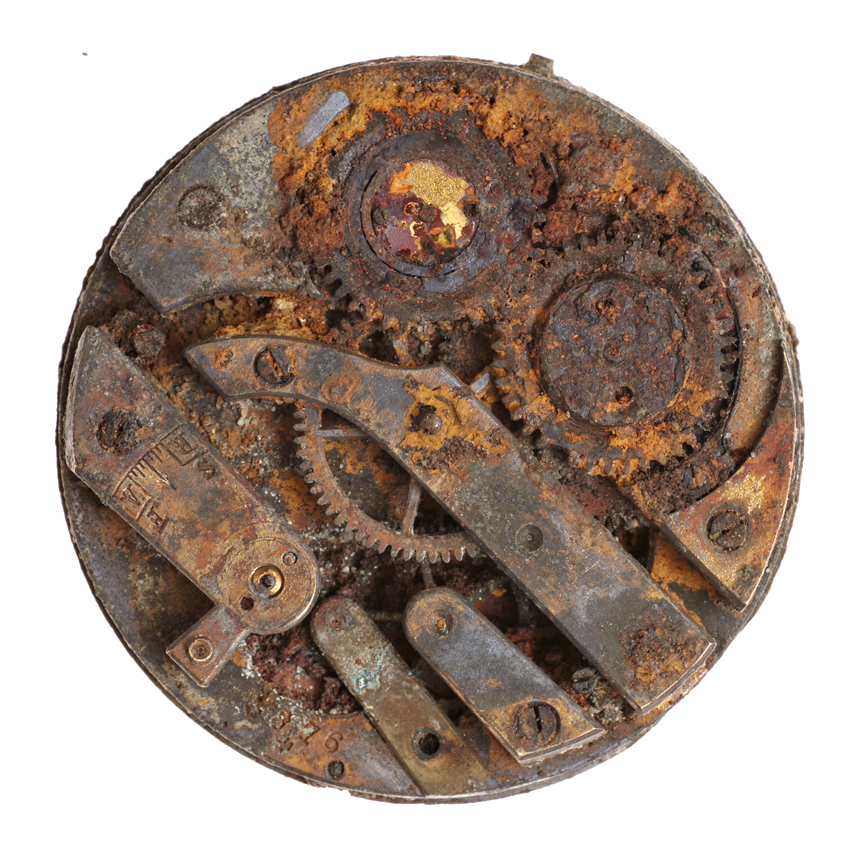
pocket watch
- date1875—1900
- locationRokin
- materialmetal: brass
- Weight (grams)42.50
- Trench number8
- Section number0970
- Feature number999
- Secondary materialenamel
- Largest length in mm41
- Largest width in mm40.50
- Largest thickness in mm8
- Diameter in mm41.00
About this object
These are the remains of a pocket watch with an enamel face dating from between 1875 and 1900. It was possibly made in France and somehow fell into the water along the Rokin. The first simple watch with a spring drive mechanism originated in the 16th century and was perfected in the 17th and 18th centuries. The introduction of this particular type of pocket watch around 1800 made it possible to tell the time with much greater accuracy. The first time measurement devices were sundials. When the sun reached its zenith, it was midday, 12 o’clock. But this meant that when it was 12 o’clock in Amsterdam, it was minutes later in the east of the Netherlands. It was not until 1909 that it was the same time all over the country. The clock on the church tower of the Westerkerk became the standard timekeeping device for ‘Amsterdam Time’ (UTC +0:20), which remained the official time throughout the Netherlands until 1937. The need for clocks across the country to be synchronised was prompted by the advent of the railways.
Read about other objects