
Finds from Damrak and Rokin
The find data can be used to compare the sites. An initial distinction can be made on numerical grounds: the yield of 465,536 finds from the riverbed at Damrak is double that of the 229,943 finds from the entire excavation at Rokin, which constitute respectively 66.7% and 33% of the total yield from all the research sites put together. Comparison of the types of material reveals a similar picture of the type of objects – waste – that were disposed of in the river at both locations. The bulk of the finds consists in both cases of ceramics (350,491), followed by bone (126,367), metal (91,849), leather (58,597), pipe clay (26,225), glass (21,218) and building ceramics (10,405). There were very few finds in any of the other categories.
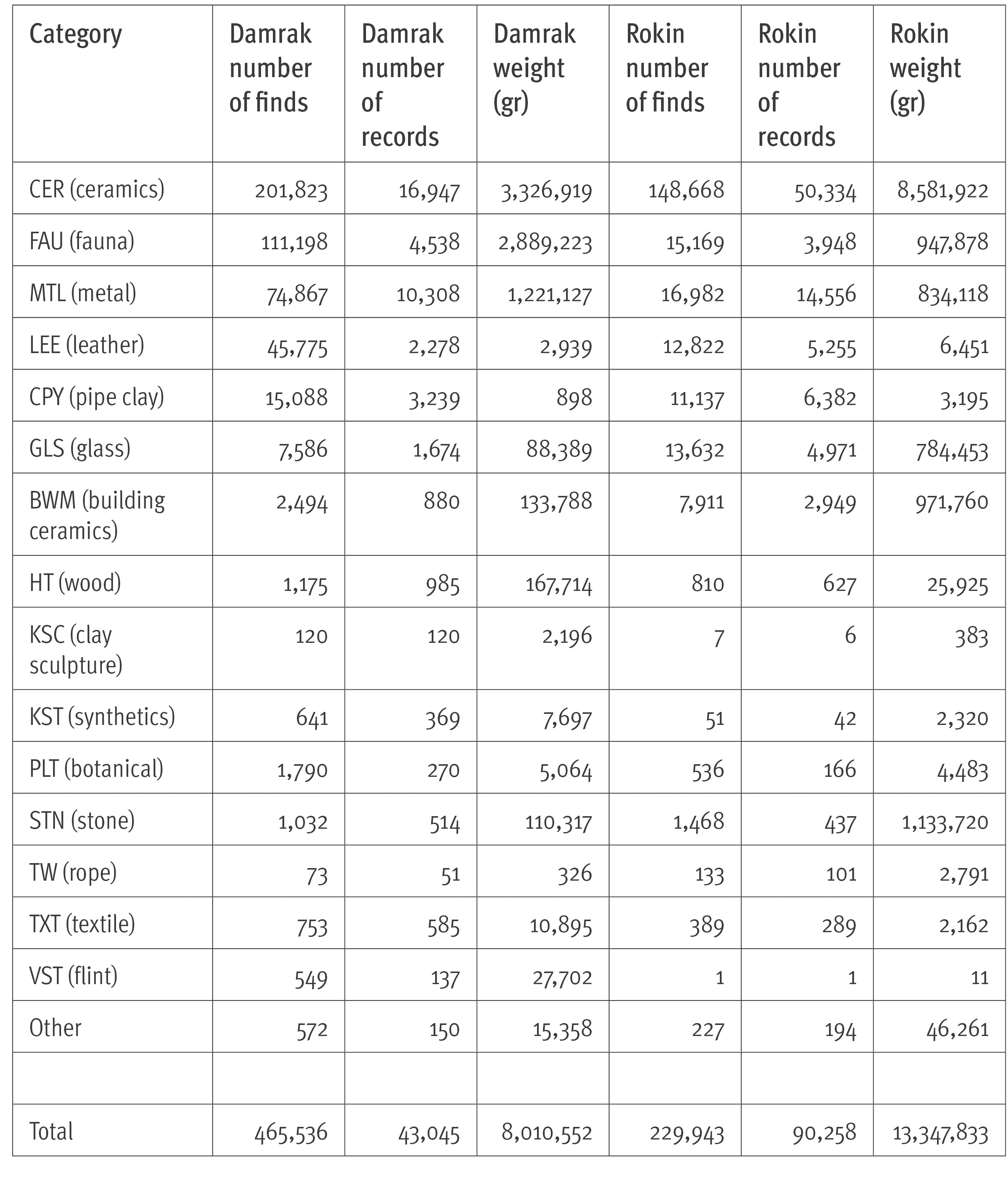
Damrak and Rokin finds by material category
"However, there were also differences between them. Although there were half as many finds at Rokin, the average weight per find at Rokin was 3.5 times greater than that of the Damrak finds."
However, there were also differences between them. Although there were half as many finds at Rokin, the average weight per find at Rokin was 3.5 times greater than that of the Damrak finds. The difference in weight indicates that the finds at Damrak were more fragmented. These simple comparisons of quantity and weight offer an initial indication of the different waste disposal practices at the two locations: at the mouth of the river the disposal of bulk waste and in the city centre the disposal of complete household items. Another factor determining the statistical outcome is the collection method. The sieve with the 1x1cm mesh yielded a comparatively large number of small finds, including a relatively large number of virtually indestructible metal objects.
Dating of the finds from Damrak and Rokin
"Besides their different datings, the two locations show the same pattern between 1600 and 1900, with a similar (slight) peak around 1650-1725 and 1800-1875."
Another striking difference between the two sites is the dating of the finds. The chronological data shows that the bulk of the Damrak material dates from 1450 to 1600 (graph 1). The peak in the first half of the sixteenth century can be put down to the construction in the first quarter of that century of a land abutment for the Nieuwe Brug, which was filled with urban waste. Another factor affecting the chronology of the finds is the construction of the massive wooden floor of the lock in 1681, sealing the streambed beneath the bridge. The Rokin finds, on the other hand, mainly date from the period 1650-1850.
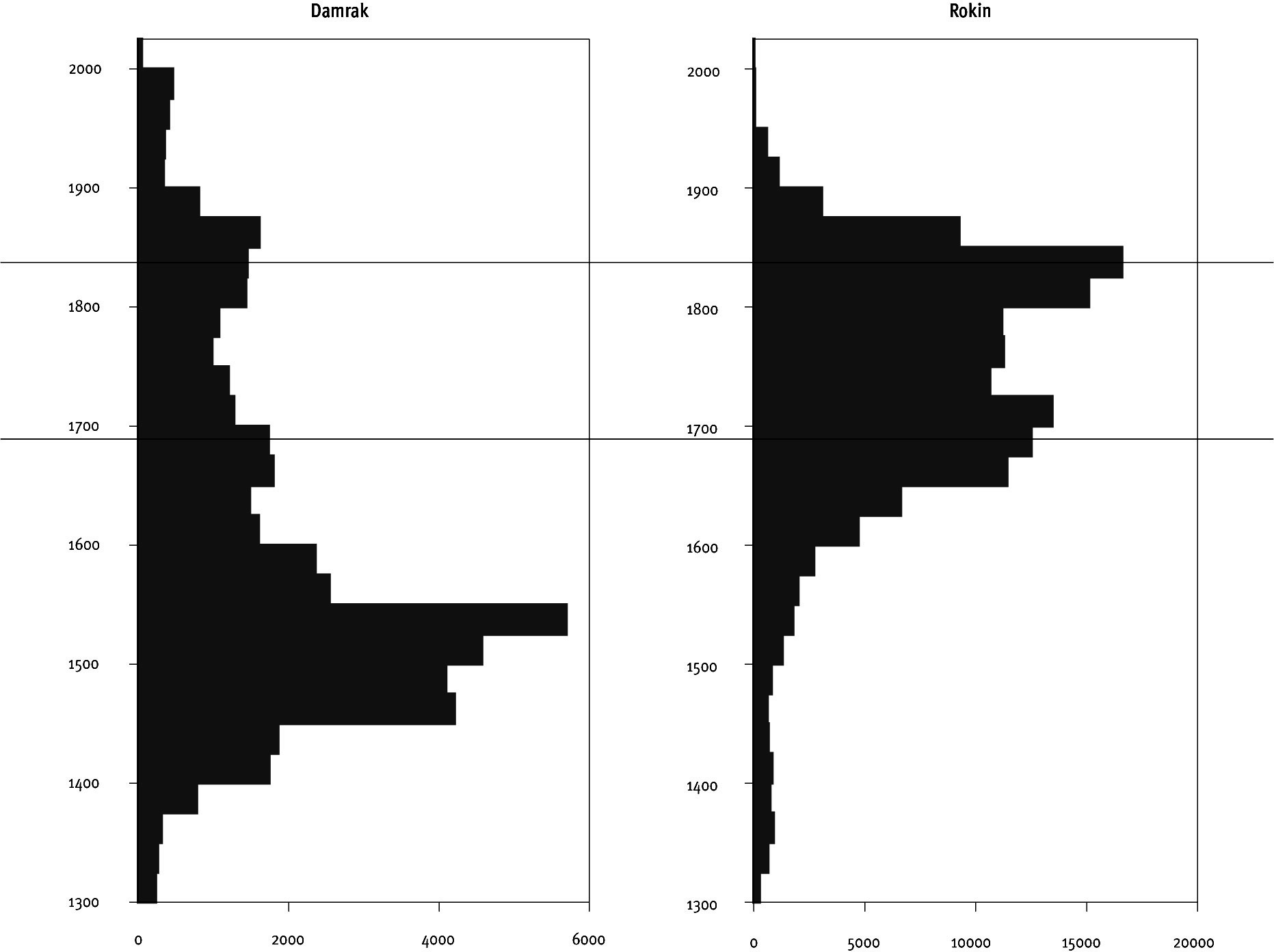
Dated finds of Damrak and Rokin. Shown here in blocks of 25 years
The more recent dating can be attributed largely to the dredging operations carried out from 1600 to maintain water levels for shipping, which cleared the waterways of material remains from earlier periods. Thus, the two sites give a further insightinto the city’s material culture in these eras. Besides their different datings, the two locations show the same pattern between 1600 and 1900, with a similar (slight) peak around 1650-1725 and 1800-1875. This dating pattern may well mirror major economic cycles, such as the blossoming of trade and the city in the seventeenth century, the stagnation and decline in the eighteenth century, and the renewed opportunity and growth brought by the industrial revolution in the nineteenth century.