
Introduction
The archaeological project of the North/South metro line
Urban histories can be told in a thousand ways. The archaeological research project of the North/South metro line lends the River Amstel a voice in the historical portrayal of Amsterdam. The Amstel was once the vital artery, the central axis, of the city. Along the banks of the Amstel, at its mouth in the IJ, a small trading port originated about 800 years ago. At Damrak and Rokin in the city centre, archaeologists had a chance to physically access the riverbed, thanks to the excavations for the massive infrastructure project of the North/South metro line between 2003 and 2012.
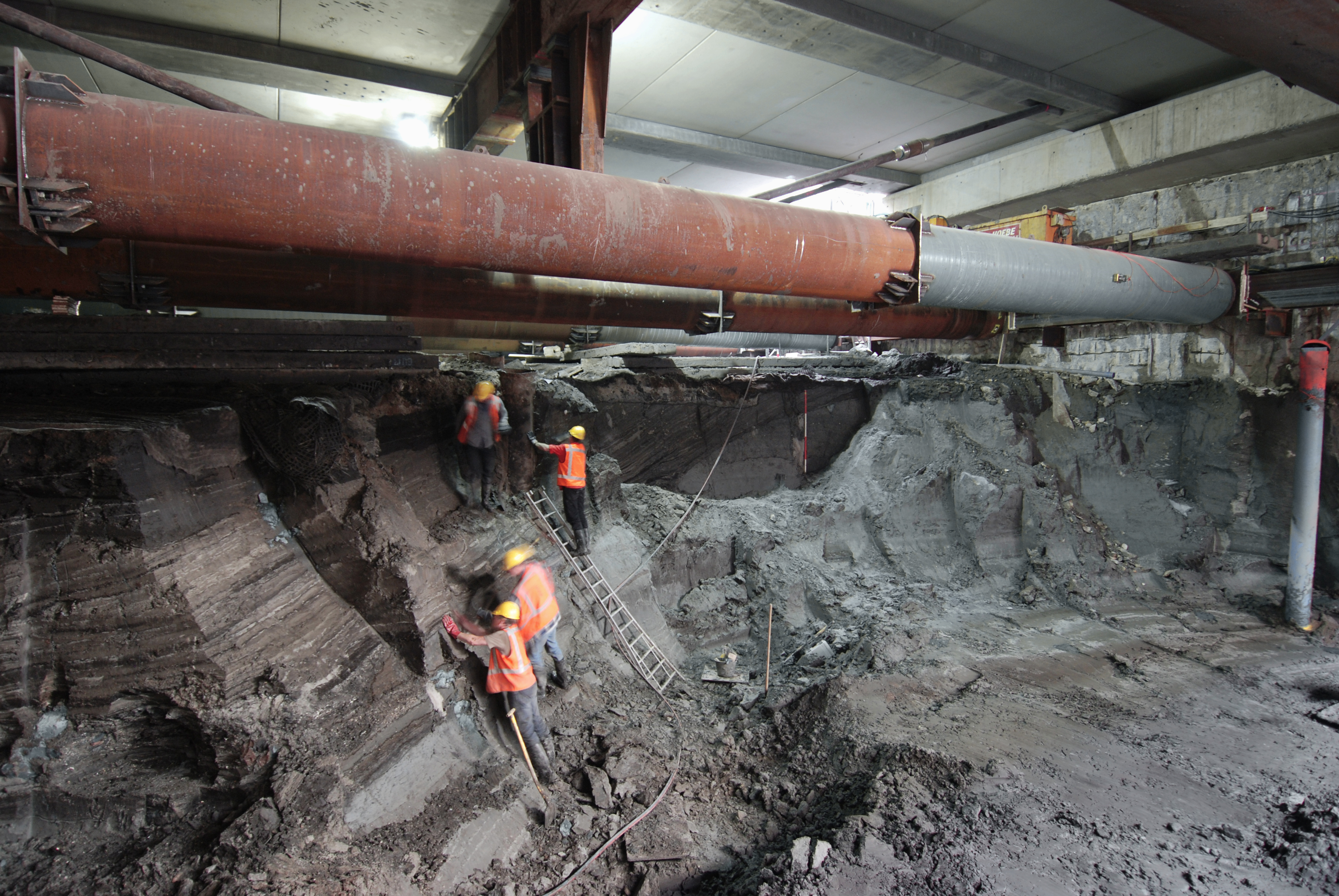
Archaeologists at work at the Rokin site
"The excavations in the Amstel yielded a deluge of finds, some 700,000 in all..."
Rivers in cities are unlikely archaeological sites. It is not often that a riverbed, let alone one in the middle of a city, is pumped dry and can be systematically examined. The excavations in the Amstel yielded a deluge of finds, some 700,000 in all: a vast array of objects, some broken, some whole, all jumbled together. Damrak and Rokin proved to be extremely rich sites on account of the waste that had been dumped in the river for centuries and the objects accidentally lost in the water. The enormous quantity, great variety and everyday nature of these material remains make them rare sources of urban history. The richly assorted collection covers a vast stretch of time, from long before the emergence of the city right up to the present day. The objects paint a multi-facetted picture of daily life in the city of Amsterdam. Every find is a frozen moment in time, connecting the past and the present. The picture they paint of their era is extremely detailed and yet entirely random due to the chance of objects or remains sinking down into the riverbed and being retrieved from there. This is what makes this archaeological collection so fascinating, so poetically breathtaking and abstract at one and the same time.
In the following pages the scope and methods of the excavations are explained with special reference to the special nature of the River Amstel as an archaeological site, the specific goals of the research at Damrak and Rokin and the digital processing of the hundreds of thousands of finds, resulting in the website belowthesurface.amsterdam and the catalogue Stuff which presents 11,279 photographs of finds of the North/South metro line archaeological project.