
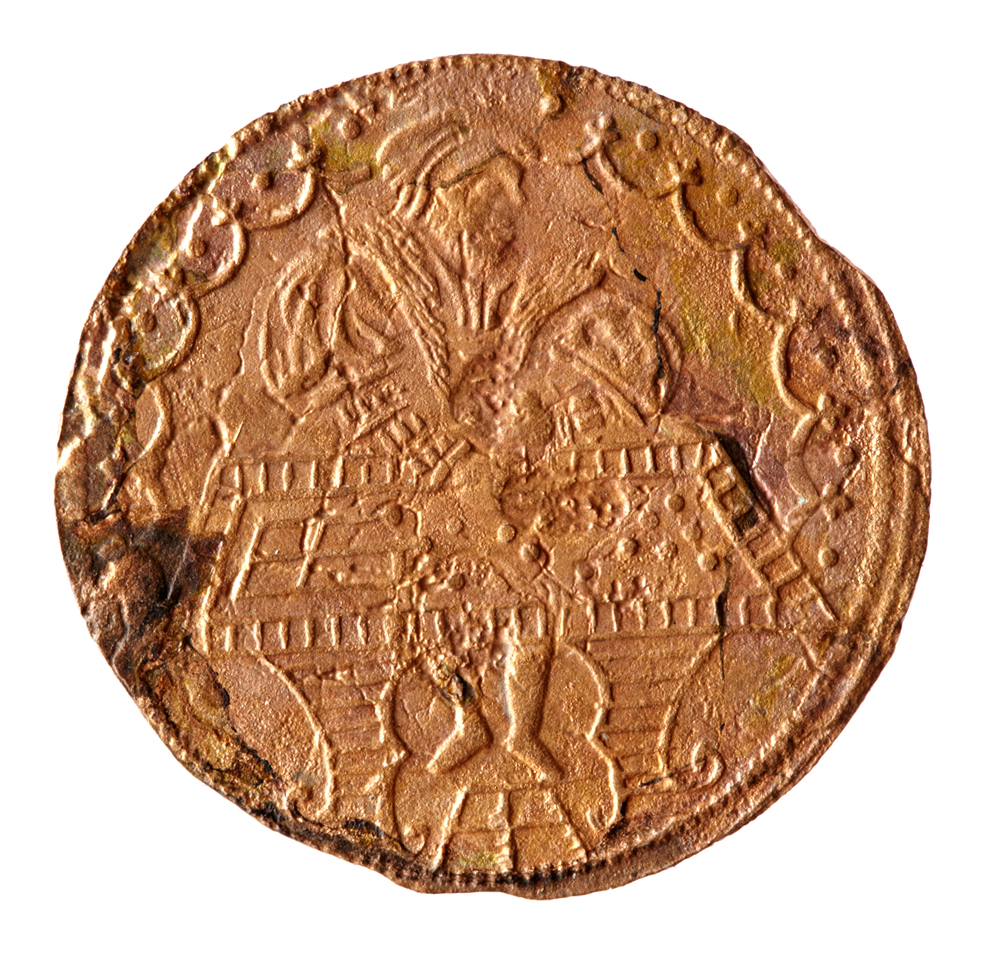
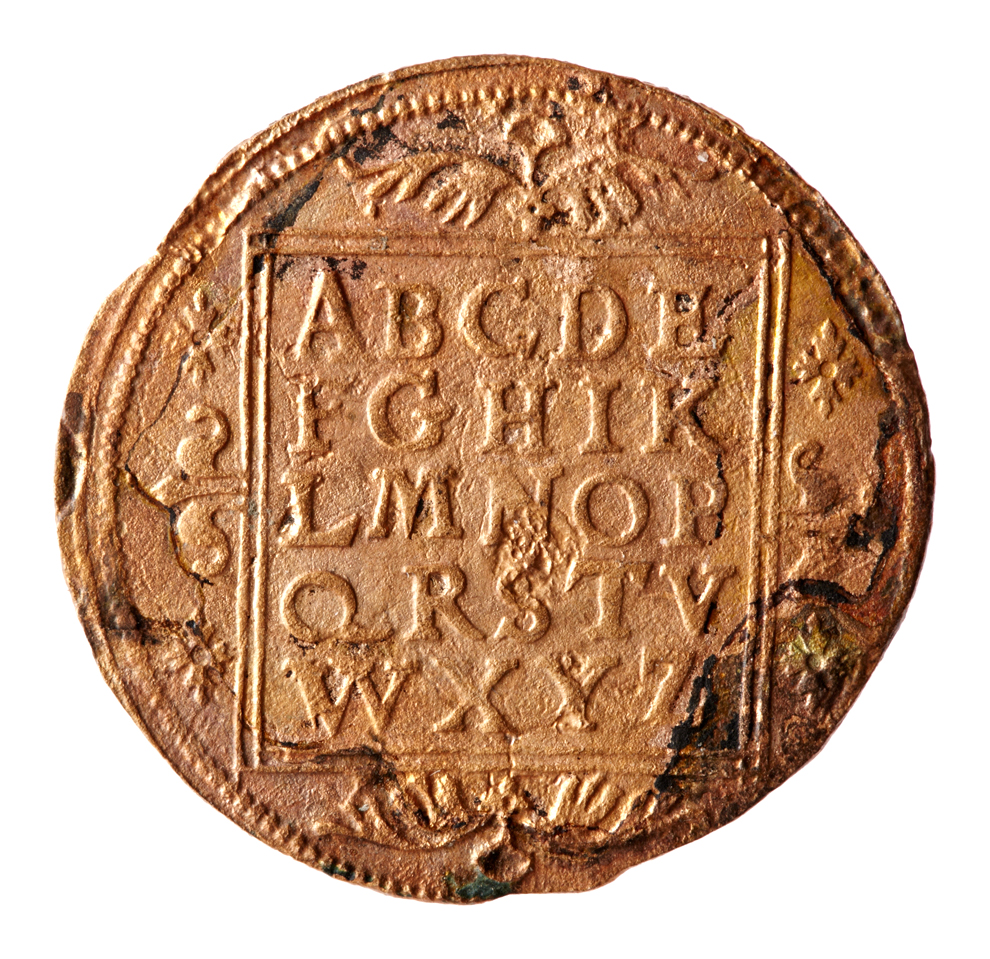
jeton
- date1550—1580
- locationRokin
- materialmetal: brass
- Keywords
- Trench number7
- Section number099
- Feature number99
- Diameter in mm28.00
About this object
Prior to the introduction of Arabic numerals (0, 1, 2, 3 etc.) in the Netherlands in the 16th century, computing was done using Latin numerals (I=1, V=5, X=10 etc.). To make computing easier, the Romans had invented the abacus. This was divided into horizontal lines of different value on which calculations could be made using stones, metal discs or coins. Around 1600 the abacus fell into disuse and the Arabic numerical system was adopted in the form still in use today. The new numerals derived their value from their position in the figure (for example, the 2 in 24 stands for 20). This is a brass monetary unit from Nuremberg dating from 1550-1580. One side shows an accountant at a computing table and the other side the alphabet. For this reason it is known as a ‘school coin’ and was used for educational purposes. The images reflect the cultural transition at the end of the 16th century. The abacus symbolises computation with Roman numerals soon to be abandoned and the alphabet stands for the new script that was introduced to replace the medieval Gothic lettering. The coins remained in circulation long after the abacus was abandoned, as gambling tokens.
Read about other objects