
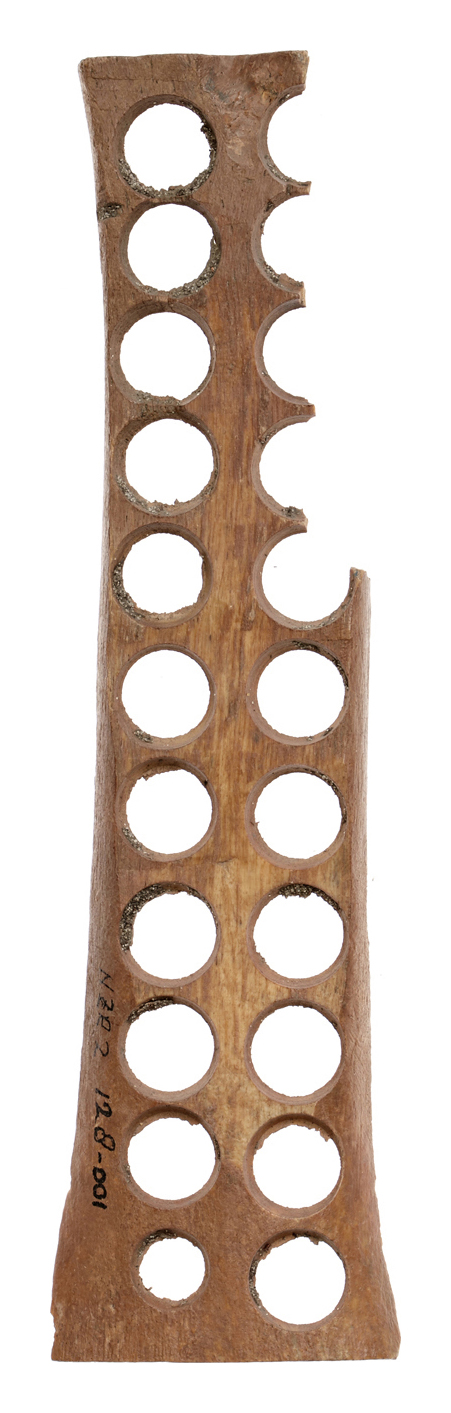
bead production waste
- date1400—1700
- locationRokin
- materialmedium large-large mammal
- Keywordsbead
- Weight (grams)23
- Trench number7
- Section number123
- Feature number95
- Specieslarge mammal
- Elementmetatarsal
- Length in mm148.00
- Width in mm40.00
- Heigth in mm8.00
About this object
This elongated strip of bone was sawn out of middle phalanx of the hand or foot of a large mammal, such as a horse or cow. Bones that were left over after slaughter were utilised in the production of other consumer goods. Small round buttons, bone rings or flat beads were drilled out of this bone, leaving a strip of bone with holes in it that the craftsman finally threw away. The beads were used to make prayer beads, which were especially fashionable in the 15th and 16th centuries. In the late 16th century these evolved into rosaries with beads in a fixed pattern. Small beads stood for the ‘Hail Marys’ to the Virgin Mary, the larger beads for the ‘Lord’s prayer’. As a result, these flat ‘Our Father’ beads came to be known as Paternoster beads. The beads of expensive rosaries were made of amber, silver or gold. The cheapest ones were of bone. This waste product is from the Rokin. A large number of monasteries and convents were situated to the east of the Rokin up to the end of the 16th century. A workshop for Paternoster beads could count on plenty of custom in this part of the city.
Read about other objects