
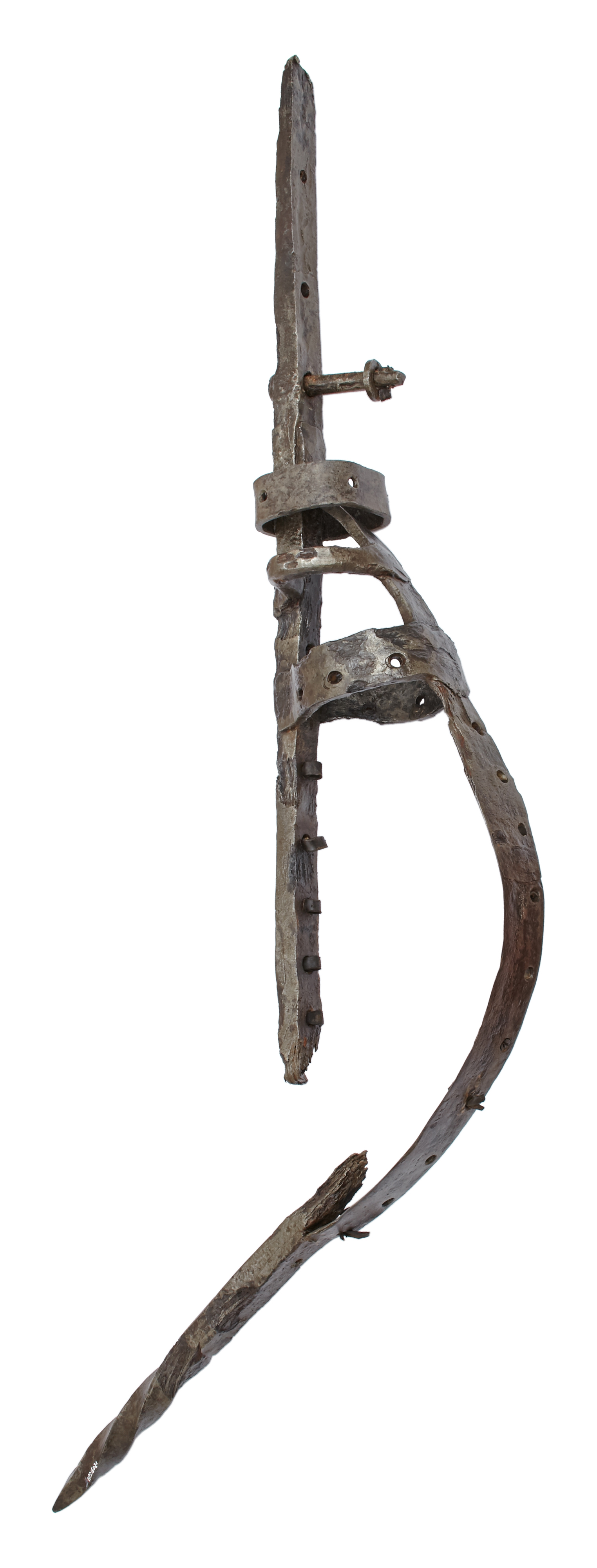
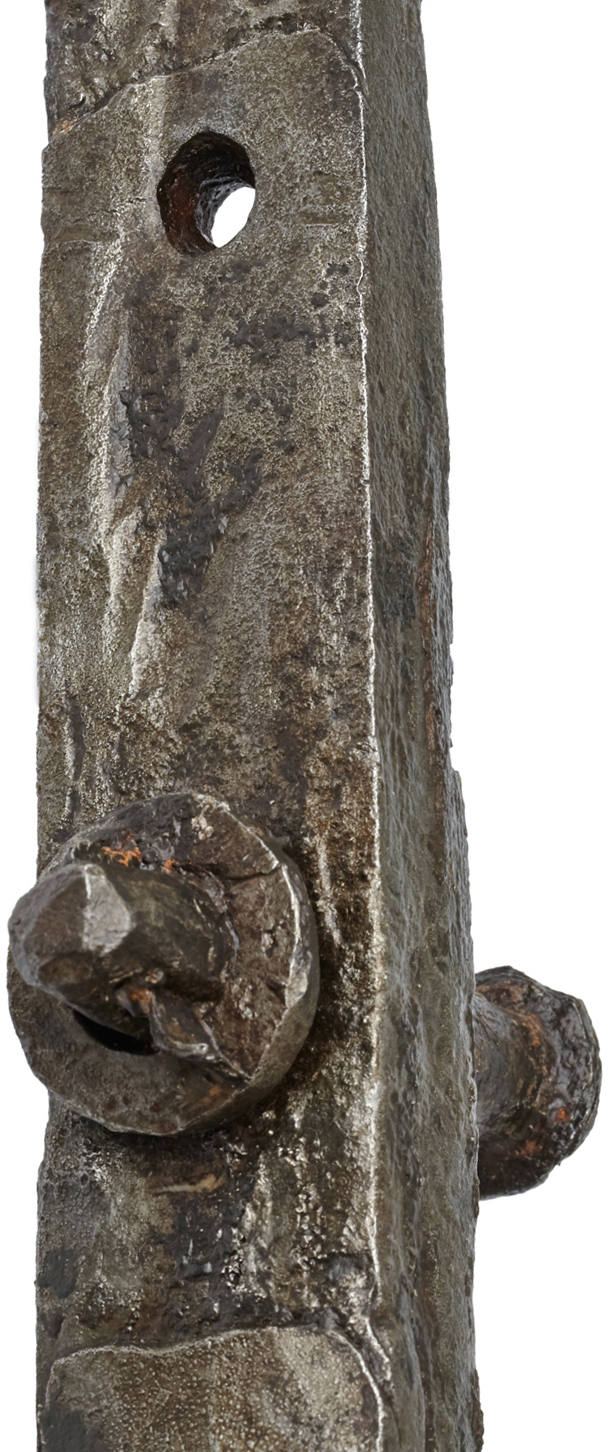
well drill
- date1600—1700
- locationDamrak
- materialmetal: iron
- Trench number1
- Section number214
- Feature number88
- Level height (NAP)-16.45 — -16.65
- Secondary materialwood, leather
- Largest length in mm1450
- Largest width in mm230
About this object
In 1602 Pieter Pieterszn Ente(n), a driller of water wells, patented an auger or soil drill like the one found in the Damrak. In effect, this drill is no more than a hand drag used for dredging - a long stick with a net or a basket at the end – mounted on its side on an axle. And yet it is an example of advanced 17th-century Dutch technology. With the auger it was possible to drill to great depths in the city in search of good water for drinking and for brewing beer. It does not seem to have been a success though, for most of Amsterdam’s drinking water was imported by water-carrier ships. The drill could also be used for scientific purposes. During the drilling of a well by Ente in 1605, Simon Stevin was the first to chart the subsoil of Amsterdam to a depth of over 70 metres.
Read about other objects